UptimeO
Self-hosted uptime observability platform with distributed Go agents, public & private status pages, and response-time analytics. Run it on your own infrastructure with Docker.
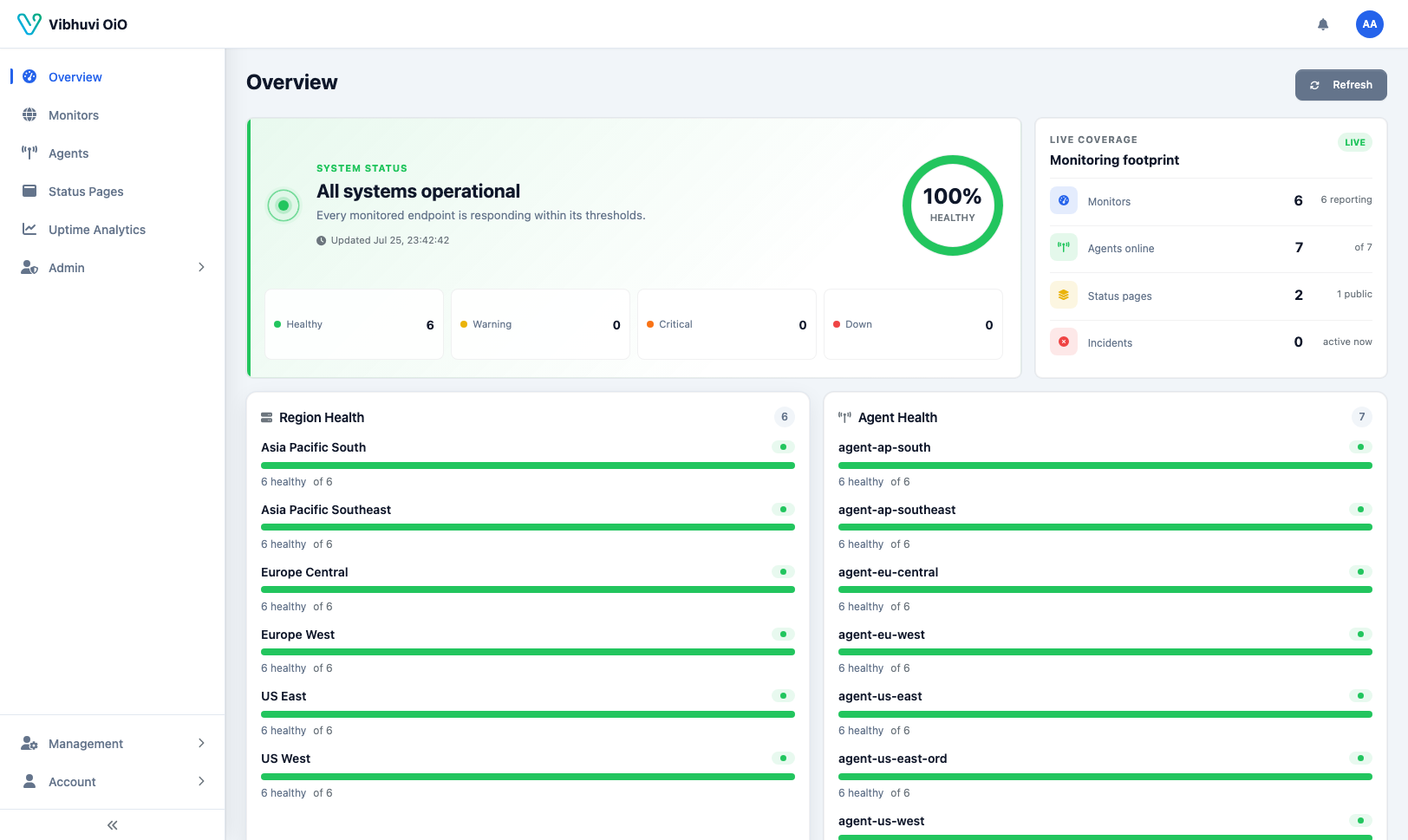
Deploy in seconds
Deploy in seconds with Docker Compose
# Download the all-in-one Compose file (PostgreSQL + app)
curl -O https://vibhuvioio.com/files/uptimeo/docker-compose.yml

# Start the stack
docker compose up -d

# Watch the app start
docker compose logs -f app

# Open http://localhost:8080 (admin / admin)
Agent environment variables
# Required for managed agents
export API_BASE_URL="http://localhost:8080"
export API_KEY="uptimeo_YOUR_API_KEY"
export AGENT_ID=1

# Optional overrides
export HEALTH_PORT=9090
export CONFIG_RELOAD_INTERVAL=1m
export QUEUE_PATH="./data/queue"
Access the UI at http://localhost:5000
Everything you need to watch your services
Multi-Region Monitoring
Group monitors by region and datacenter to see geographic health at a glance.
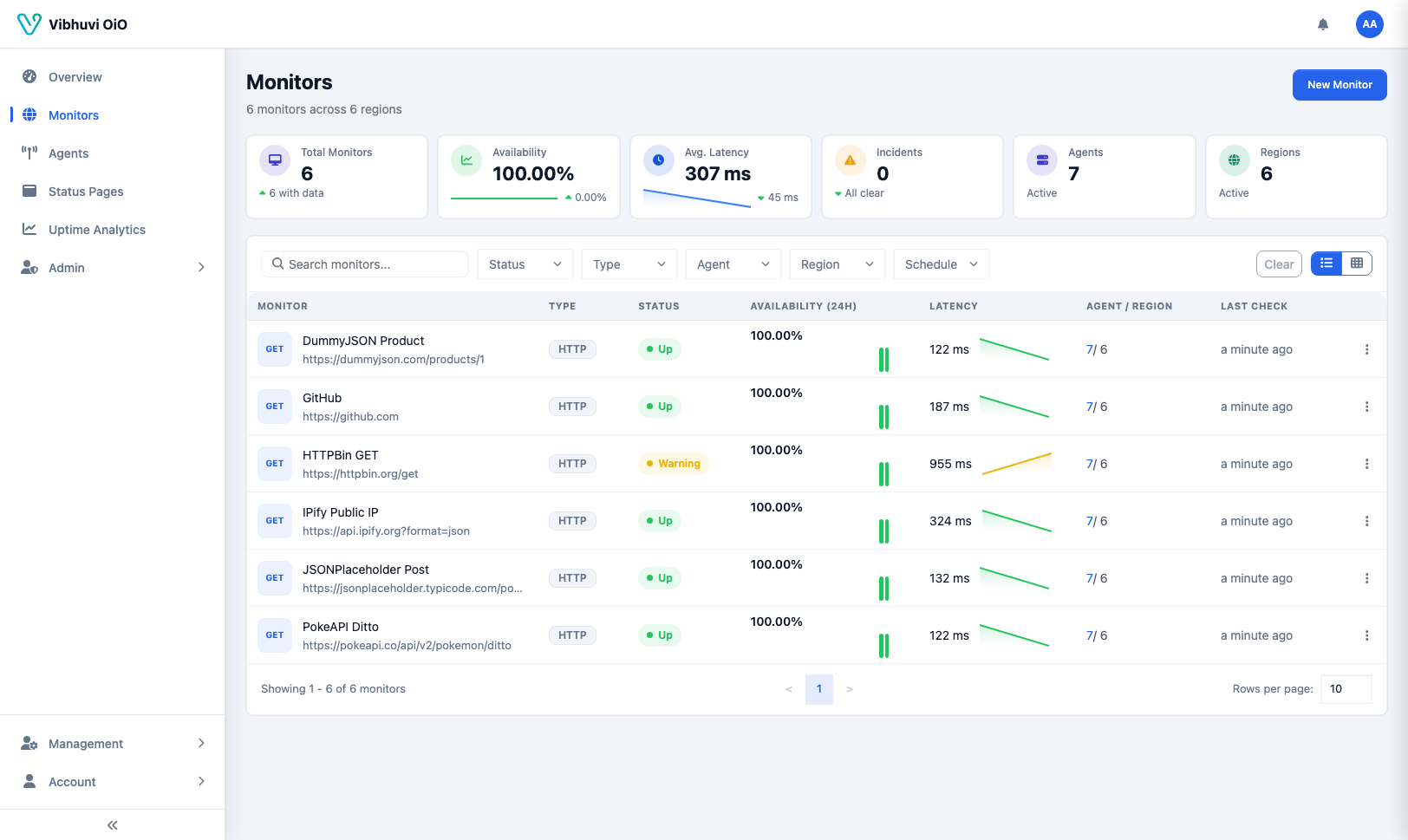
Distributed Go Agents
Lightweight agents pull monitor assignments from the API and report heartbeats with persistent queues.
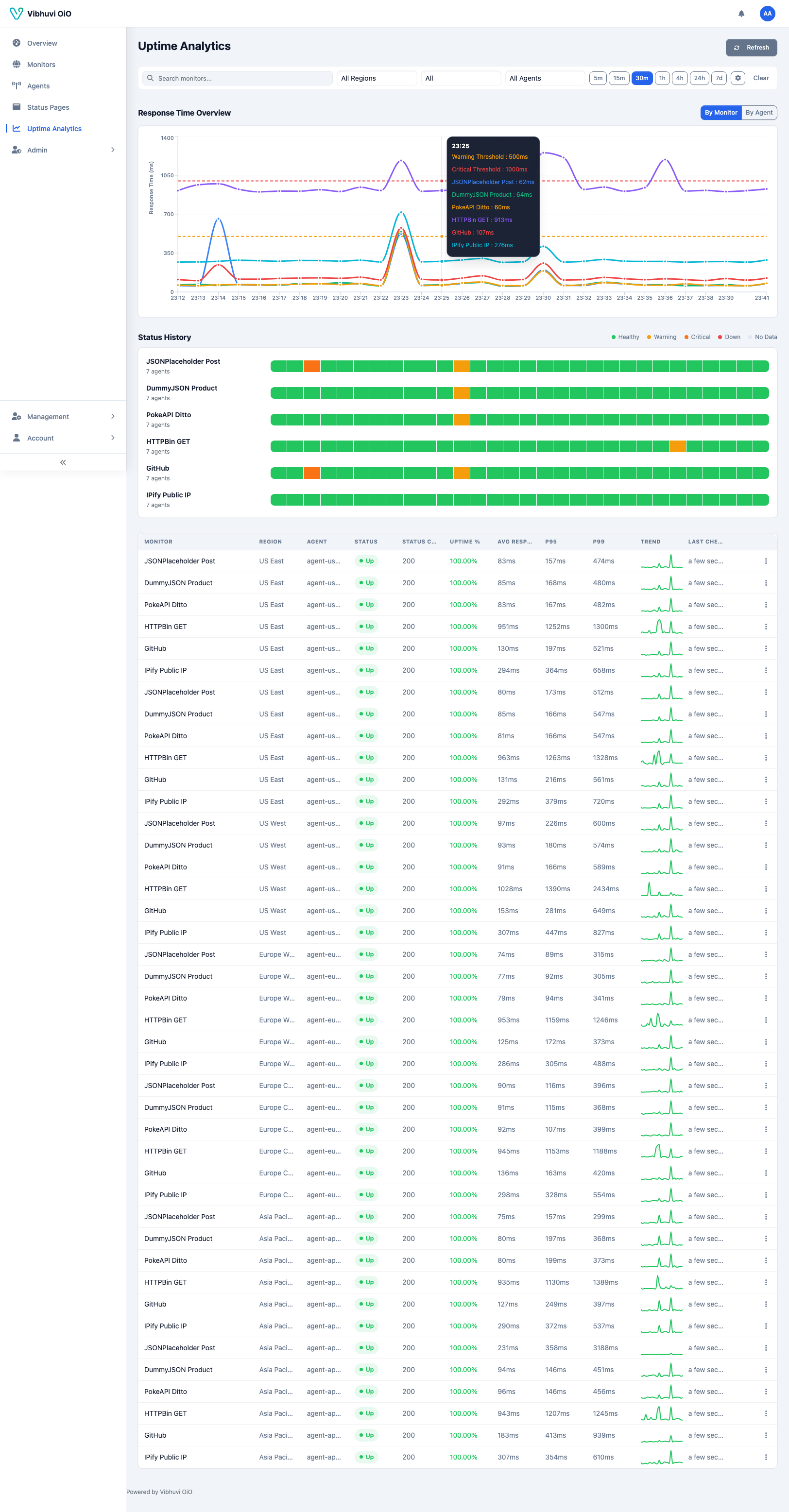
Response-Time Analytics
Track availability, latency trends, and status history from one analytics dashboard.
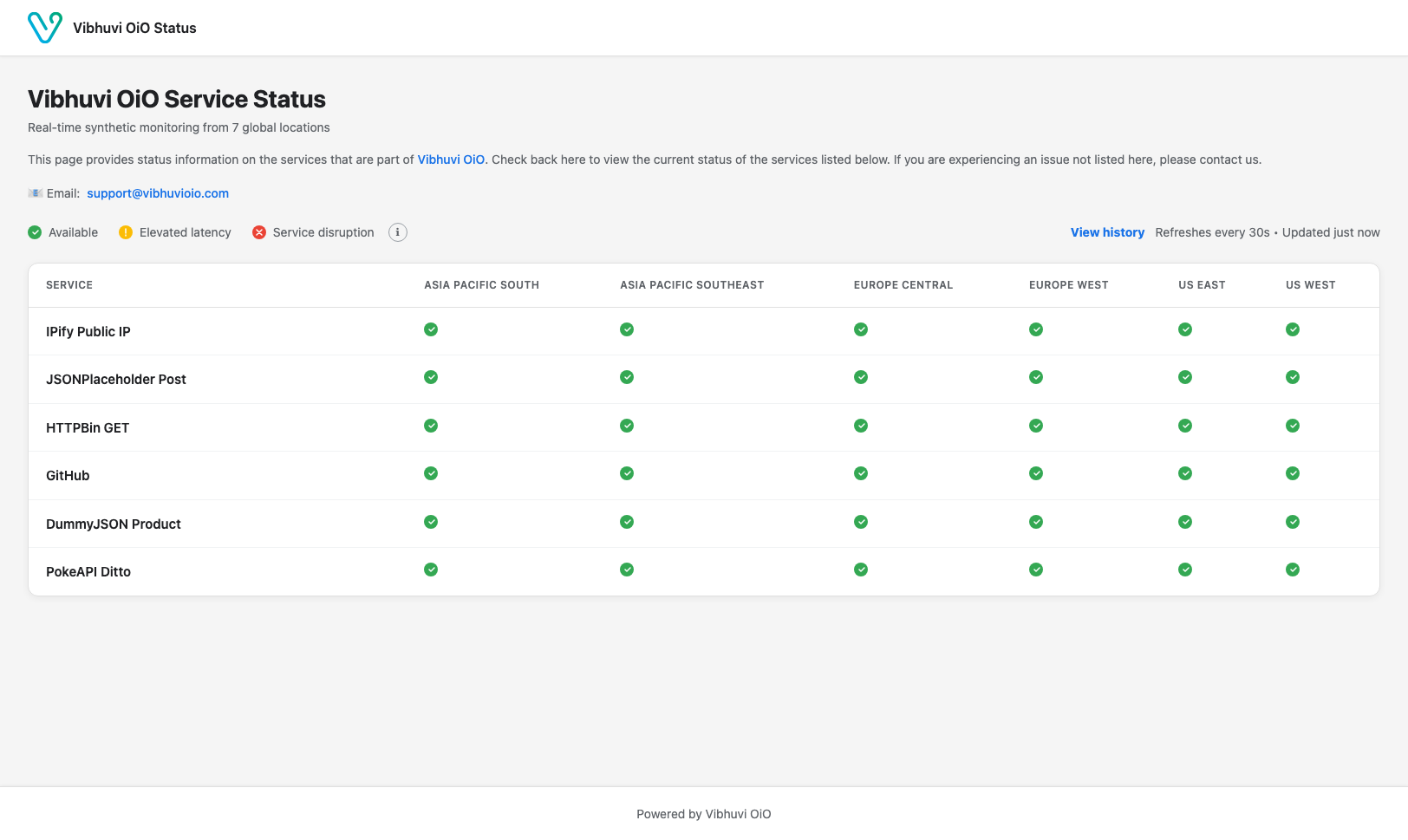
Public & Private Status Pages
Share real-time status with customers or keep it internal with private page links.
Audit Log & Retention
Review every change and configure automatic cleanup of old heartbeat partitions.
Smart Notifications
Slack and email alerts for outages, high latency, and agent health issues.
Product Screenshots
Documentation
Getting Started
Overview of UptimeO and how to sign in for the first time.
Installation
Deploy UptimeO with Docker Compose and required environment variables.
First Agent
Create an agent in the UI and connect a Go monitoring agent.
HTTP Monitors
Configure monitors, schedules, and monitor-to-agent assignments.
Status Pages
Build public or private status pages from your monitors.
Uptime Analytics
Explore availability, latency, and status history.
Notifications
Slack and email alerts for monitors and agents.
Ready to get started?
Deploy UptimeO on your own infrastructure and start monitoring your services in minutes.